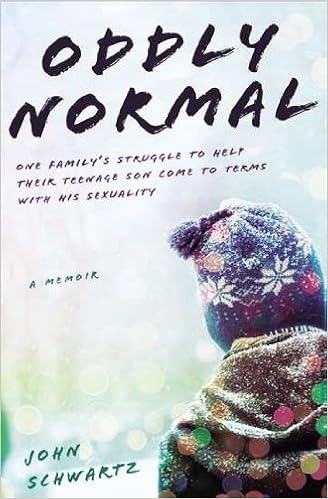
For my book club project, I read John Schwartz’s Oddly Normal, a memoir about his son
Joseph’s journey through childhood, dealing with mental health issues and
coming to terms with his sexuality. In the following review, I will list some disruptions I had while reading this novel and the takeaways I have as a future teacher.
Minority Stress
I was very curious to understand
more about minority stress, a concept that John brought up several times in the
novel. The most basic definition of minority stress is the discomfort that
comes from being different. The most obvious pressure comes from encounters
with actual prejudice; however, there can also be internal pressure that is caused
by expectations of rejection and discrimination. Even when minorities are not
directly confronted about their differences, they can be affected by society’s
general attitude towards them. For LGBT youth, there is additional stress
involved with concealing sexual orientation or gender identity. This really
opened my eyes to the various stresses that minorities, particularly LGBT
people, experience in their daily lives. Many of these stresses are caused by
covert, subtle influences that much of society (including, occasionally,
myself) feels more comfortable ignoring. We must confront these issues. Just
because someone is not being discriminated against or harassed outright, does
not mean that they have achieved an equitable status in society.
Over-Diagnosing Kids
I was disrupted by the fact that
the school’s attitude prevented Jeanne from sharing that her child had
attempted suicide for fear they would try to get rid of him. This was based on
past experiences in which Joe’s school looked for excuses to get rid of
troublesome students by labeling them as “a threat to themselves or others.” While
this may be a valid concern at times, there was more they could have done to
improve the situation and provide Joseph with the support he needed but they
were not willing to do so. Rather, the administration desired that Joe be given
a diagnosis so that they might classify him and shunt him into special
education programs.
As John repeatedly emphasized
throughout the memoir, Joe’s issues and quirks never really fit into one
diagnosis. In fact, John discusses several issues that come from
over-diagnosing our children. For one, kids are being over-medicated, causing
adverse effects in their health and well-being. In addition, a false diagnosis’
can become a crutch for a child and lead them to give up trying to improve
their behavior because they believe they lack the ability to do so. People
become defined by their ability. They become a single story. In Joe’s case and
in many others, their individual needs can be discovered and met without giving
out labels like candy. When Joe’s teachers took this approach, they were much
more successful in getting him to behave and perform.
As teachers, we must take this
approach. We should not define our students by a single story, but rather look
at them as unique individuals and identify their needs from there. As a high
school teacher with over one hundred students, this may seem like a difficult
task. I will most likely not be able to identify the needs of and attend to all
of my students. However, I can present a warm, accepting persona so that my
students feel safe in my class and even comfortable approaching me with
problems. I can treat them all as individuals rather than classifying them in
my mind. I can challenge and disrupt stereotypes rather than promoting them.
Mental Illness in Teens
A major theme of the novel was the
prevalence of mental illness among teens and especially among LGBT youth. As
John describes, teens’ tender psyches have not yet been toughened by
experience, so when they are hit with life’s downturns, they are deeply
affected. Even with extremely supportive therapists and family, pressures at
school to fit in drove Joseph to attempt suicide. This just goes to show how
much of an impact the school experience can have on students.
As teachers, we must be sensitive
to our students during the tumultuous time of adolescence. I believe we are
responsible to educate ourselves about the signs of mental illness and suicide
so that we might help our students and notify the proper channels if we notice
anything out of place. We also need to be understanding of what adolescents
consider important. To us, teenage heartbreak may seem unnecessarily dramatic,
but to them it may be sincerely devastating. We cannot brush these things aside
because they can have lasting effects on our students.
The Biddle Scale
It was interesting to see where Joe’s
parents fell on the Biddle Scale. Especially at the end of the novel, it was
clear that they had reached the level of Nurturance, believing that Joe had
unique qualities to offer the world that came in part from being gay. It was helpful
to see a clear example of what Nurturance might look like, especially as a
future teacher, where being nurturing and supportive of all my students,
including the LGBT ones, will be of vital importance. A safe space sticker in
my classroom will not be enough; I will need to be sincere and comfortable with
LGBT youth in order to build trust with them and actually be a person they feel
comfortable talking to. By valuing my students for the unique contributions
they make to the world, I may be able to build this needed trust.

No comments:
Post a Comment